
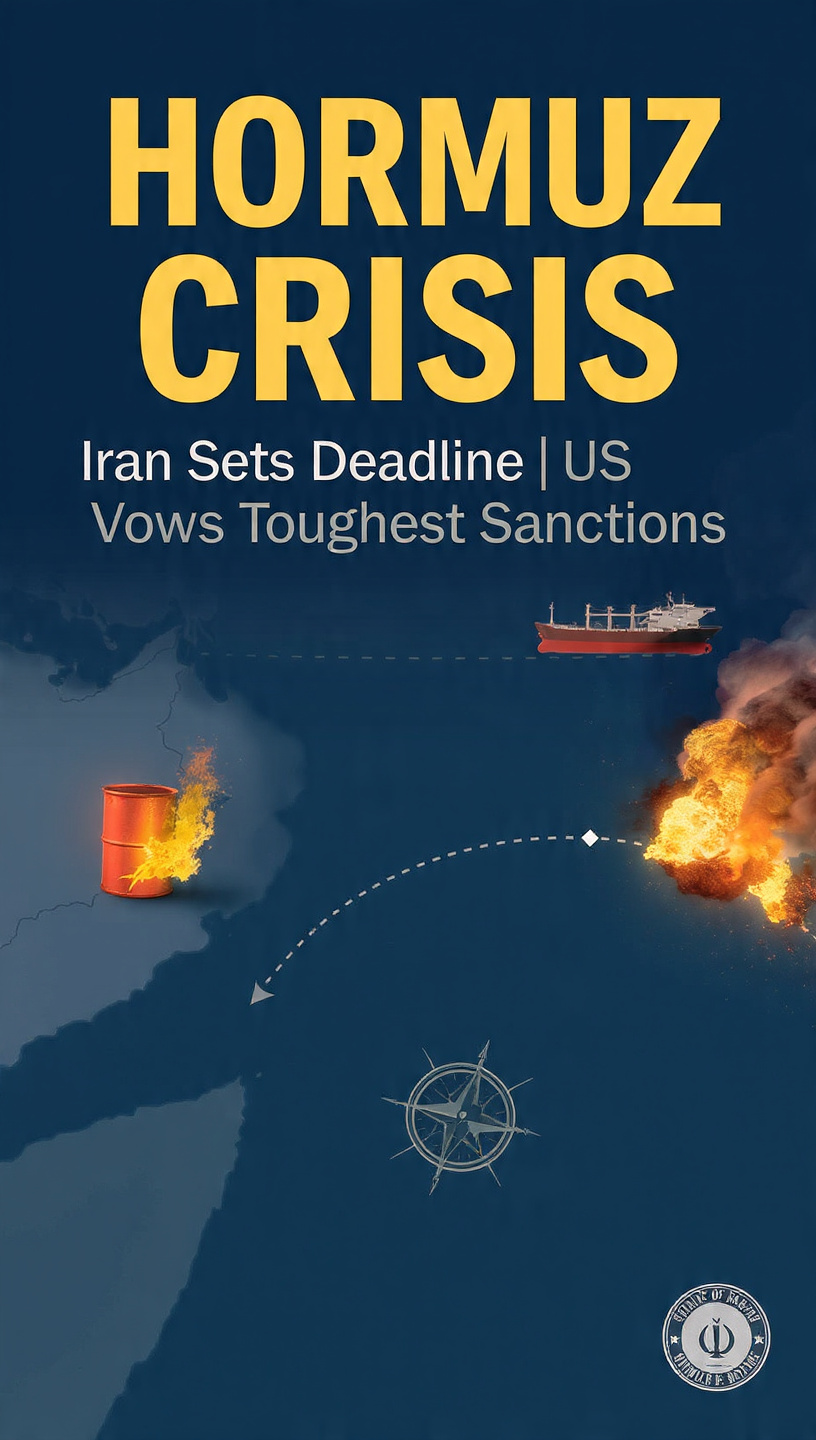
Tensions Surge in Strait of Hormuz as Iran Sets Deadline, US Vows ‘Toughest Sanctions in History’
TEHRAN / WASHINGTON – The strategically vital Strait of Hormuz is once again at the center of rising tensions as Iran issued a stern warning and the United States announced sweeping new economic measures against Tehran.A senior Iranian official told Reuters on Monday that Tehran will escalate tensions in the Strait of Hormuz and beyond if the U.S. fails to fully implement an interim peace deal within the next few weeks.”If the U.S. does not meet that deadline and diplomacy fails, Tehran would conduct a ‘timely and precise’ military attack to break the U.S. naval blockade,” the official added.Iran said it is shifting its policy from defence to offence, citing a loss of confidence in Washington’s commitment to diplomacy. Iranian officials also stated that the Strait of Hormuz will not reopen until the U.S. first returns to the deal.US Responds with ‘Maximum Economic Pressure’In a direct response, U.S. Treasury Secretary Scott Bessent declared on Thursday that Washington will impose “the toughest sanctions in history” on Iran.President Donald Trump also warned of “Economic Warfare” against any country providing “any type of lifeline to Iran”.Bessent said the new sanctions are part of a “one-two punch” that includes the U.S. naval blockade imposed on Iran in April. He suggested that maximum economic pressure could reduce the need for “large-scale kinetic” military action.Impact on Oil and ShippingFollowing the U.S. threats, oil prices rose to a three-week high. The Strait of Hormuz carries about one-fifth of all traded oil globally, making any disruption a major risk for global energy markets.Iran’s foreign ministry condemned the sanctions as “economic terrorism” that targets ordinary Iranians.The U.S. and Iran have twice announced ceasefire deals in April and June to restore free navigation through Hormuz, but both agreements quickly crumbled.